

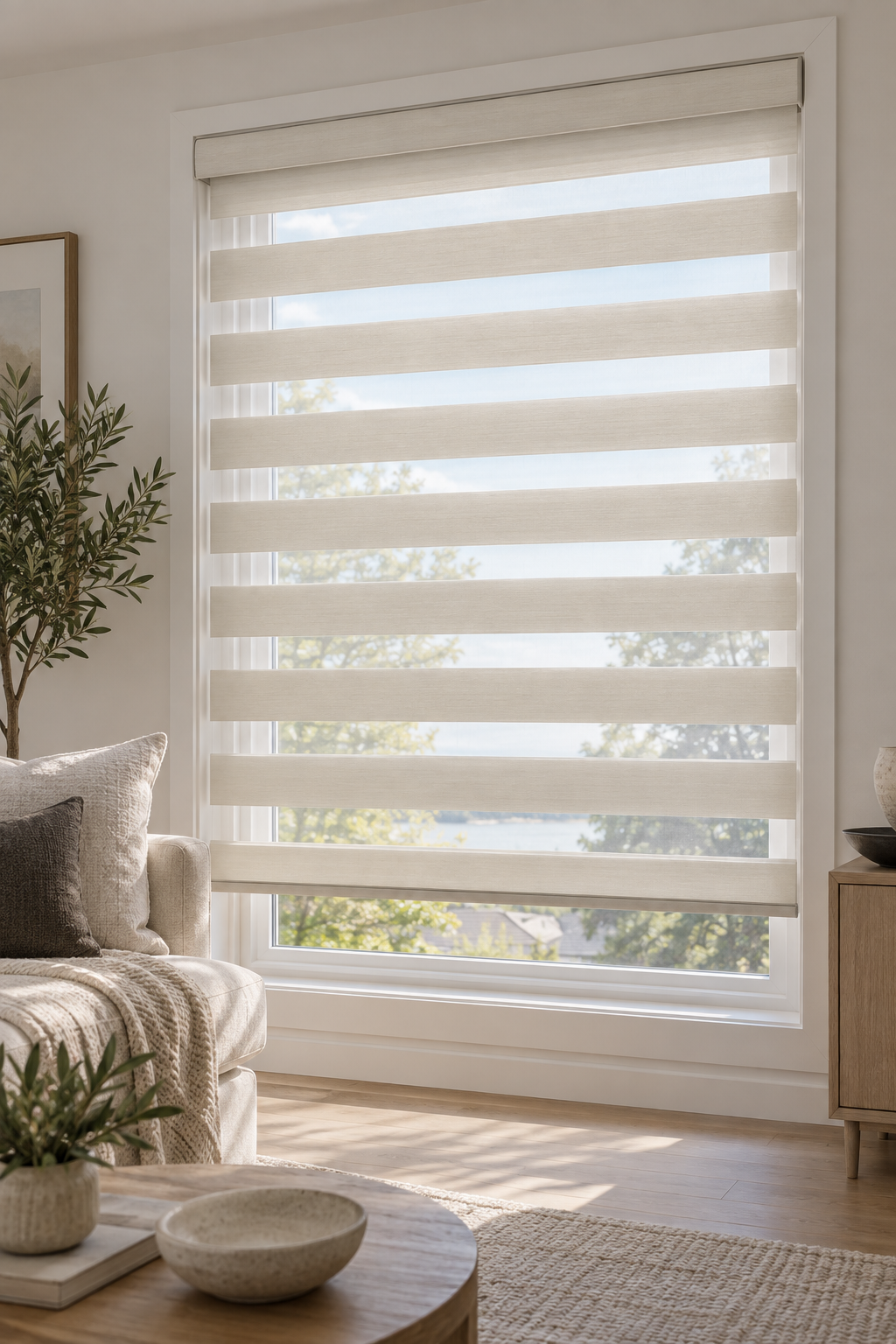
Ordering made-to-measure blinds in Oakville is a staged process, not simply a choice from a catalogue. It usually moves from a design consultation and product selection to individual window measurement, quote approval, custom fulfilment, installation preparation, professional blinds installation, and final checks.
The most reliable results come from making practical decisions early. Define what each room needs, assess every window rather than assuming identical windows are interchangeable, and confirm exactly what the quote and installation include before approving the order.
Quick summary

- Start with room priorities such as privacy, glare control, room darkening, appearance, and ease of operation.
- Compare blinds, shades, and shutters according to the window and how the room is used.
- Use preliminary measurements and photos for discussion, but rely on product-specific professional measurement for final specifications.
- Review product details, dimensions, mounting, operation, installation scope, and timing variables in the quote.
- Prepare access, furniture, condo or building permissions, and motorized-blind requirements before installation day.
The made-to-measure blinds process at a glance
Every project is different, but this framework shows what normally needs to be decided and confirmed at each stage.
| Stage | Your decision | What to confirm | Possible variables |
|---|---|---|---|
| Consultation | What should each room achieve? | Privacy, light, style, access, and operation | Room use, furniture, window position |
| Product selection | Which covering suits each opening? | Product type, material, opacity, finish, and controls | Window size, décor, daily use |
| Measurement | How will every window be assessed? | Dimensions, trim, handles, recess, obstructions, and mounting | Unusual openings, skylights, large windows |
| Quote approval | Does the proposal reflect the project? | Products, quantities, installation scope, and timing factors | Material availability, project size |
| Preparation | Is the property ready? | Access, permissions, furniture clearance, and controls | Condo rules, office access, wiring or batteries |
| Installation | Does everything fit and operate correctly? | Alignment, movement, access, and aftercare questions | On-site conditions and final adjustments |
1. Start with a design consultation and room priorities

A useful design consultation begins with the room, not a product name. Consider whether the priority is daytime privacy, glare control, a darker bedroom, a coordinated appearance, easier access, or a combination of these needs.
Write down the purpose of each room and any problems you want the window covering to address. A living room may need flexible daylight and privacy, while a bedroom may place greater emphasis on room darkening. An office may need to manage screen glare without making the space unnecessarily dark.
Also note nearby furniture, handles, radiators, desks, shelving, and other features that could affect access or operation. Made-to-measure blinds can be planned around room use and window conditions rather than standard dimensions alone.
2. Compare blinds, shades, shutters, and operating options
There is no single best window covering for every Oakville property. The appropriate choice depends on the window configuration, desired appearance, privacy and light-control needs, and how often the covering will be adjusted.
- Roller blinds: A streamlined option using a single panel of fabric. Compare opacity, colour, mounting position, and the level of light control required.
- Venetian blinds: Slatted blinds that allow you to adjust light and privacy by changing the slat angle. Material and finish influence the look and maintenance requirements.
- Vertical blinds: Worth considering for wide openings or particular office and commercial layouts, subject to the window, furniture, and access conditions.
- Wooden and faux-wood blinds: Useful when the appearance of slats is important. The room's moisture, cleaning, heat, sunlight, and operating conditions should be discussed.
- Roman shades: A fabric-based choice that can bring texture and softness to a room. Fabric, fold style, mounting, and operation all require consideration.
- Cellular or honeycomb shades: A structured shade option that may suit particular design and light-control preferences. Confirm the product's specifications for the intended window.
- Blackout shades: Designed for stronger light control, but the final result also depends on opacity, mounting, window construction, and gaps around the covering.
- Shutters: A more substantial architectural-style treatment. Review the opening, clearance, frame, and operating space before selecting this approach.
- Motorized or smart blinds: Appropriate to discuss when windows are hard to reach, frequently adjusted, or part of a convenience-focused plan. Confirm the controls, power approach, and operating requirements before ordering.
Lavish Blinds offers these categories as part of its made-to-measure window-covering range. The goal of the consultation is to match the covering to the window and daily use, rather than apply one style throughout the property without checking each room.
3. Prepare for the on-site measurement
Professional measurement is where general preferences become window-specific specifications. Each opening should be assessed individually, even when several windows look identical. Small differences in width, height, trim, recess depth, handles, or surrounding obstructions can affect the product and mounting arrangement.
Before the appointment, identify every window by room and position. Move items that block access where possible, and point out handles, unusual trim, limited recess depth, nearby furniture, and any difficulty reaching the window.
Photos can help explain the surrounding area during an initial discussion, but they do not replace an on-site assessment. The measurement should consider the window, the selected product, how it will be mounted, and how it needs to operate.
Preliminary measurements versus final specifications
Home measurements can be useful for starting a conversation or understanding the approximate project size. They should not automatically be treated as the final dimensions for a made-to-measure order.
Different products have different requirements for mounting, clearance, operation, and fit. A blackout shade, Venetian blind, shutter, or motorized covering may need a different assessment from a basic roller blind. The frame, handles, recess, trim, obstructions, and intended mounting position can all affect the final specification.
For this reason, use your own measurements to prepare questions, not to remove the need for product-specific professional measurement. Lavish Blinds provides free on-site measurement and quotes for its custom window-covering process.
4. Review the custom blinds quote before approving it
A quote should make it clear what is being supplied and what will happen at installation. Before approving it, compare the proposal with your room-by-room priorities and check that no window or special requirement has been overlooked.
- Which rooms and individual windows are included?
- What product category, material, colour, finish, and opacity have been selected?
- Are the dimensions based on the final on-site assessment?
- Will the coverings be inside-mounted, outside-mounted, or installed using another arrangement?
- What operating method is included, such as manual, remote-controlled, or automated operation?
- What does professional installation include?
- Are special access conditions, large windows, skylights, or commercial scheduling addressed?
- Which factors could change fulfilment or the expected installation timing?
- What aftercare or operating guidance will be provided after installation?
Custom pricing depends on measurements, product type, materials, and installation requirements. A free quote is most useful when it reflects the actual windows and clearly identifies the project's scope.
5. Understand fulfilment and project timing
There is no dependable universal timeline for every made-to-measure blinds project. Timing can vary according to design choices, measurements, product and material availability, project size, custom fulfilment, access, and installation readiness.
A project covering one straightforward room may require less coordination than one involving several rooms, large-format windows, skylights, unusual openings, motorized controls, or commercial access. Ask for a project-specific schedule rather than relying on a general number of days or weeks.
If timing matters, raise it before approving the quote. Confirm which decisions must be finalized, whether access or building rules could affect the appointment, and when the property needs to be ready for installation.
6. Prepare the property for blinds installation
Good installation preparation reduces avoidable interruptions. Clear furniture and personal items from the window area where possible, and make sure installers can reach each opening safely. For offices, consider desks, shelving, equipment, meeting schedules, and public-facing areas that may affect access.
Condo owners should confirm any building requirements before the appointment. Ask about elevator bookings, visitor access, permitted installation hours, parking, and rules affecting window coverings or exterior-facing work. The exact requirements depend on the building, so they should be verified with the property manager or condominium corporation.
For motorized or smart blinds, discuss controls and access before installation. Confirm where the controls will be used, how the coverings will be operated, and whether any power, charging, battery, or connectivity details need to be planned. Do not assume that motorization automatically solves every access or blackout concern.
7. What to expect during installation and final checks
Professional blinds installation involves fitting the coverings to the assessed openings and checking that they sit correctly. The installer should review alignment, clearance, movement, and operation, including any remote or automated controls included in the project.
Use the final check to compare the installed coverings with the approved quote. Confirm that each room and window has been addressed, that the controls are understood, and that no furniture or handle interferes with normal use.
Ask any aftercare questions before the installer leaves. Customer feedback for Lavish Blinds includes individual reports of neat, professional work on large windows and skylights, but those experiences are examples rather than guarantees for every project.
Special considerations for condos, offices, large windows, and skylights
These projects often need more planning because access, window configuration, and daily use can vary substantially.
- Condos: Check building permissions, access procedures, elevator arrangements, and installation-hour restrictions before scheduling.
- Offices: Assess privacy, screen glare, meeting-room use, staff access, furniture, equipment, and the frequency with which coverings will be adjusted.
- Large windows: Confirm how the size affects product selection, mounting, operation, delivery, and installer access. Do not assume a product is suitable until the opening has been assessed.
- Skylights: Discuss access, angle, operating method, and installation conditions early. These openings may require additional planning compared with standard vertical windows.
- Multiple rooms: Label every window and confirm whether the same appearance is intended across rooms, while still allowing for different functional needs.
Questions to ask before approving made-to-measure blinds
- Which product best suits each room's privacy, light, style, and operating needs?
- How will each window be measured, including trim, handles, recess depth, and obstructions?
- Are my measurements preliminary, or have final product-specific dimensions been confirmed?
- What mounting position and clearance will be used?
- What is included in the blinds installation?
- Which factors could affect fulfilment or scheduling?
- What permissions or access arrangements are needed for my condo or office?
- How will motorized or automated blinds be operated and maintained?
- What should I check before accepting the completed installation?
- Who should I contact if an operating or aftercare question arises?
Frequently asked questions
Can I use my own measurements to order made-to-measure blinds in Oakville?
You can use preliminary measurements and photos to support an initial discussion, but they should not automatically replace final professional measurement. Product type, mounting position, trim, handles, recess depth, obstructions, and operating requirements can affect the final specifications.
What should an Oakville condo owner confirm before blinds installation?
Confirm the condominium's rules for window coverings and installation access, including permitted hours, elevator bookings, visitor procedures, parking, and any requirements from the property manager. Also ensure the window areas are clear and that the selected mounting and operation suit the unit.
Does choosing motorized blinds change the made-to-measure process?
It can add planning decisions. Discuss power or battery requirements, control location, remote operation, automation expectations, and access before the order is approved. The window still needs product-specific measurement, and motorization does not by itself guarantee blackout or solve every fit issue.
Why might large windows or skylights require additional planning?
Large windows and skylights may involve unusual dimensions, access conditions, mounting requirements, furniture or equipment clearance, and different operating needs. These factors can affect product selection, fulfilment, scheduling, and installation preparation.
Conclusion: Plan the project around your windows and daily needs
The made-to-measure blinds process in Oakville is easiest to manage when you treat it as a sequence of decisions. Begin with each room's priorities, compare products according to the window and its use, arrange professional on-site measurement, and review the quote for scope, mounting, operation, installation, and timing variables.
Preparing access, furniture, building permissions, and control requirements before installation can also reduce avoidable delays. Preliminary measurements are helpful for discussion, but final specifications should reflect the selected product and the actual conditions of every window.
For personalized design guidance, free on-site measurement, and a quote in Oakville, contact Lavish Blinds.