

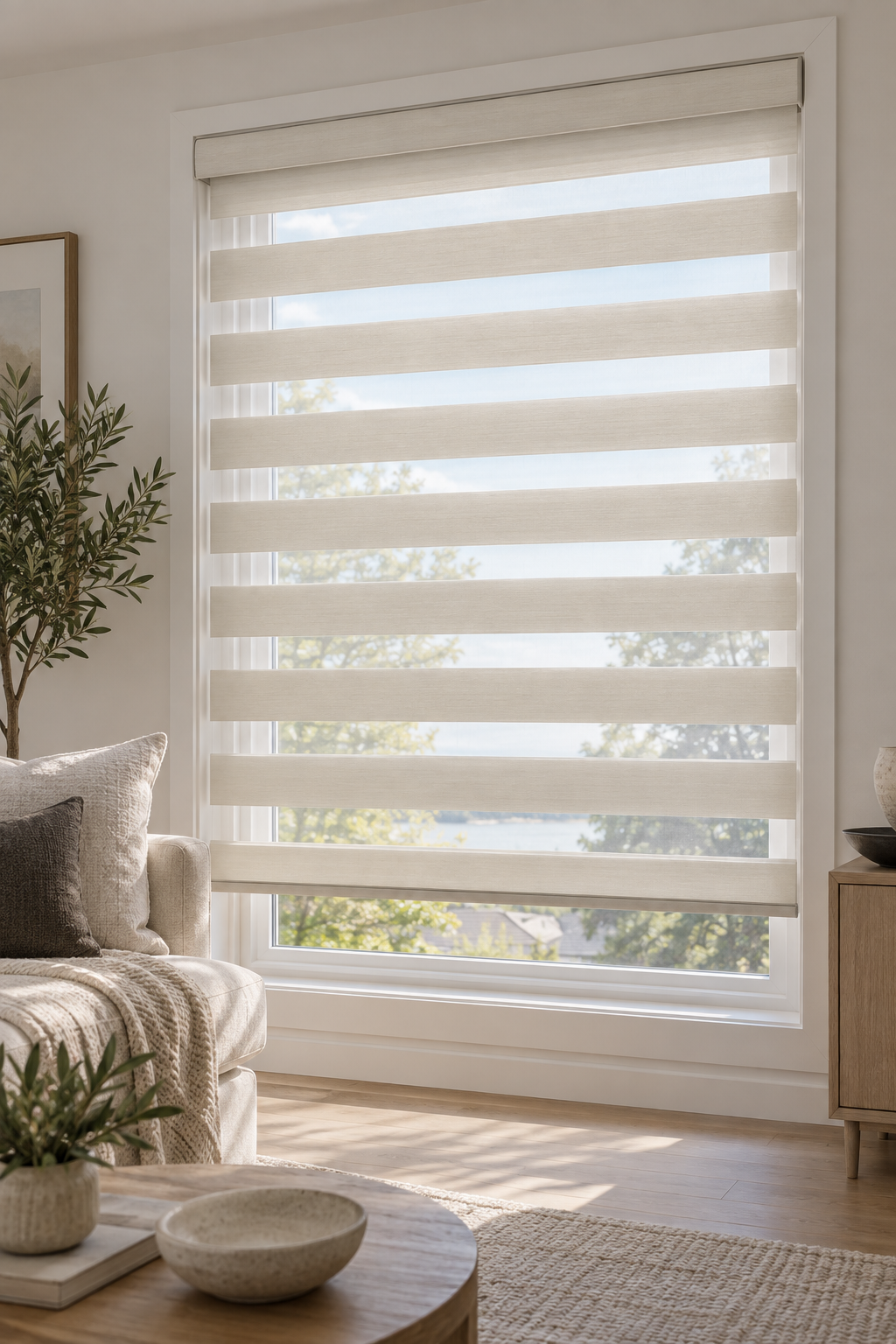
The best plantation shutter styling ideas are not chosen by appearance alone. The right look depends on the room’s function, window proportions, privacy needs, daylight, furniture clearance, and how easily the panels need to open.
Full-height, café, tier-on-tier, wide-louvre, hidden-tilt, colour-matched, and layered treatments can all create different effects. The practical question is which approach suits your window and daily routine, and whether shutters are the best covering for the job.
Quick summary

- Choose the coverage style according to privacy, daylight, room-darkening, and window-access needs.
- Check panel movement, handles, trim, furniture, window depth, and door clearance before ordering.
- Plantation shutters can provide structured style, adjustable privacy, and controlled daylight, but they are not automatically a blackout or insulation solution.
- Layer shutters with curtains when you want added softness or coverage, but confirm stack space and operating access.
- Use custom measurement and a project-specific quote before committing to made-to-measure shutters.
Plantation shutter styles compared
Plantation shutters can give a window a structured, architectural appearance. Their final effect depends on coverage, panel arrangement, louvre proportions, colour, hardware, and how the treatment relates to surrounding trim and furnishings.
For practical guidance on proportions, room suitability, and design trade-offs, review these custom shutter selection tips before choosing a plantation shutter style.
| Style direction | May suit | Check before ordering |
|---|---|---|
| Full-height shutters | A consistent, uninterrupted treatment across the window. | Panel movement, furniture clearance, window access, and desired daylight. |
| Café shutters | Lower-window privacy while keeping more daylight above. | Whether the uncovered upper section suits the room’s proportions. |
| Tier-on-tier shutters | Independent control of upper and lower sections. | Panel weight, operating space, handles, and comfortable access. |
| Wider-louvre shutters | A less segmented appearance and broad daylight adjustment. | How the proportions relate to window size, room scale, and privacy. |
| Hidden-tilt shutters | A cleaner-looking front without visible control hardware. | How panels will be reached and operated behind furniture. |
| Colour-matched shutters | A coordinated treatment that blends with the room. | How the colour works with trim, walls, flooring, furnishings, and daylight. |
| Shutters with curtains | A layered look with additional softness, texture, or coverage. | Track position, stack space, window depth, and independent operation. |
These are styling directions rather than universal recommendations. Panel design, fit, gaps, window condition, and installation all influence the finished result, so a visually appealing concept still needs a practical assessment.
Room-by-room plantation shutter styling ideas

Begin with what the room needs the window covering to do. Bedrooms, living rooms, kitchens, bathrooms, offices, and condos may require different balances of privacy, daylight, access, appearance, and operating convenience.
Living rooms and open-concept spaces
Living rooms often benefit from a consistent treatment across several windows. Full-height shutters can support a structured look, while wider-louvre or colour-matched approaches may help the treatment feel integrated with the architecture.
Check how panels open around sofas, media units, shelving, and radiators. If the room needs a softer appearance, curtains can be layered over or around the shutters, provided there is enough space for the fabric to stack without blocking the panels.
If you are coordinating plantation shutters with other treatments, the custom blinds buying guide can help you compare materials, operating needs, privacy, daylight, and furniture clearance.
Bedrooms
Bedrooms usually require careful attention to privacy and night-time light control. Full-height shutters or a tiered arrangement may provide a consistent appearance, but assess edge coverage, panel gaps, and how much light may remain around the treatment.
Plantation shutters should not automatically be treated as complete blackout systems. If strong room darkening is the main requirement, compare them with blackout shades and discuss mounting position, coverage, and likely light gaps before ordering.
Also consider window access. A shutter style that looks neat when closed may be inconvenient if you regularly open the window, reach a handle, or move panels around a bed or other furniture.
Kitchens and bathrooms
In kitchens and bathrooms, styling decisions should include room conditions, cleaning, ventilation, access, and the specific product’s material and finish. Do not choose a treatment solely because it resembles wood or matches a cabinet colour.
Confirm whether the proposed product is appropriate for the location and ask about care requirements. Near sinks, counters, doors, or frequently used windows, panel movement and clearance can matter as much as appearance.
Condos, offices, and large windows
Condos and offices often need a coordinated appearance across multiple windows, sometimes with restrictions involving access, furniture, building rules, or installation scheduling. A consistent colour and coverage approach can create visual continuity, but each opening still needs individual assessment.
Large windows, skylights, and unusual openings require particular attention to measurement, panel movement, reachability, and support for the chosen configuration. A project-specific plan is more useful than assuming one style will work identically across every opening.
Match the shutter style to your main design goal
| Primary goal | Approach to consider | Important trade-off |
|---|---|---|
| Structured appearance | Full-height, colour-matched, or coordinated louvre design. | A structured treatment may feel less soft than fabric shades or curtains. |
| Lower-window privacy | Café coverage or independently operated lower panels. | The upper window may remain exposed to daylight and outside views. |
| Flexible daylight control | Panels or sections that adjust independently. | More moving sections require careful planning for access and clearance. |
| Stronger room darkening | Compare shutters with blackout shades and assess edge coverage. | Shutters should not be assumed to provide blackout performance. |
| Softer decoration | Layer shutters with curtains or compare Roman shades. | Layering needs additional wall, ceiling, and stack space. |
| Convenient operation | Choose the easiest panel arrangement for the window and room. | An inaccessible window may suit another operating format better. |
Lavish Blinds offers plantation and custom shutters alongside roller, Venetian, vertical, wooden and faux-wood blinds, Roman, cellular, blackout, motorized, and smart options. Comparing these categories helps prevent a style preference from overriding the room’s actual requirements.
Mixing plantation shutters with other window coverings
Layered curtains with shutters can add softness, colour, texture, or another level of coverage. This approach may work particularly well in living rooms and bedrooms where the shutter provides structured privacy and the curtain contributes a different visual effect.
Layering is not automatically better. Check whether the curtain rod or track has enough projection, where fabric will stack, whether it interferes with handles or panels, and whether both treatments can open without obstruction.
Coordinating shutters with roller, Roman, cellular, blackout, or faux-wood blinds elsewhere in the home can also create a cohesive scheme without forcing every window into the same product. Match the overall colour and design language where useful, while allowing each room’s needs to guide the final choice.
Pre-order checklist for made-to-measure shutters
Before requesting a quote, prepare a room-by-room list rather than selecting a style from a sample alone. Ask the installer to review:
- Window width, height, depth, shape, and unusual features.
- Trim, casing, handles, locks, screens, doors, and nearby obstructions.
- Furniture clearance and the space required for panels to open fully.
- Whether the window needs to open regularly and how the treatment will be reached.
- Privacy requirements during the day and at night.
- Daylight, glare, and room-darkening expectations, including acceptable light gaps.
- Preferred coverage: full-height, café, tier-on-tier, or another arrangement.
- Colour, louvre proportions, control position, care requirements, and room conditions.
- Whether curtains or another covering will be layered with the shutters.
- What the quote includes, including measurement, product, installation, operating components, and aftercare.
Custom sizing helps address the actual opening and surrounding conditions, but it cannot correct every underlying window or building problem. Professional measurement and installation are therefore important checks, not just administrative steps.
When another window covering may be a better fit
Plantation shutters may be a strong choice when you want structured style, adjustable privacy, controlled daylight, and a tailored fit. They may be less suitable when your leading priority is a soft fabric appearance, stronger room darkening, a very simple profile, or remote operation for an inaccessible window.
- Blackout shades: Compare these when bedroom or media-room darkness matters more than a shutter’s structured appearance.
- Roller blinds: Consider them for a clean, continuous profile and straightforward light control.
- Roman shades: These may suit interiors where fabric texture and a softer decorative treatment are central.
- Cellular or honeycomb shades: Compare them when a shade format better matches your comfort and styling priorities.
- Faux-wood blinds: These may suit a wood-inspired look with adjustable slats, subject to material, finish, care, and room conditions.
- Motorized or smart blinds: These may be worth discussing for hard-to-reach windows or when convenient operation is a leading goal.
FAQ about plantation shutter styling
Are full-height or café plantation shutters better for privacy?
Neither is automatically better. Full-height shutters can provide coverage across the window, while café shutters focus privacy on the lower section and leave more of the upper area open. Consider sightlines, window height, daylight, and whether upper-window privacy matters.
Can plantation shutters be combined with curtains?
Yes. Confirm available wall or ceiling space, fabric stack position, panel clearance, and whether both treatments can operate independently.
Are plantation shutters suitable for bedrooms that need strong room darkening?
They may suit a bedroom where structured style and privacy are important, but do not assume they will provide complete blackout. Compare blackout shades and discuss edge coverage, mounting, gaps, and the level of darkness you expect.
What should I check before ordering shutters for large or unusual windows?
Ask for an on-site assessment of dimensions, trim, depth, handles, panel movement, access, furniture clearance, and installation requirements. Large windows, skylights, and unusual openings should have a project-specific design and measurement plan.
Choose a plantation shutter style that works in the room
Start with the room’s function, then compare coverage, panel movement, privacy, daylight, room-darkening expectations, and surrounding furniture. Use full-height, café, tier-on-tier, wider-louvre, colour-matched, and layered treatments as ways to explore the options, not as fixed answers.
Made-to-measure shutters work best when the design is checked against the actual window, trim, access, and installation conditions. If another covering better meets the room’s main need, choosing it is more useful than forcing shutters into every space.
For personalized guidance, free on-site measurement and quotes, and professional installation, speak with Lavish Blinds about window coverings for your home, condo, or office.